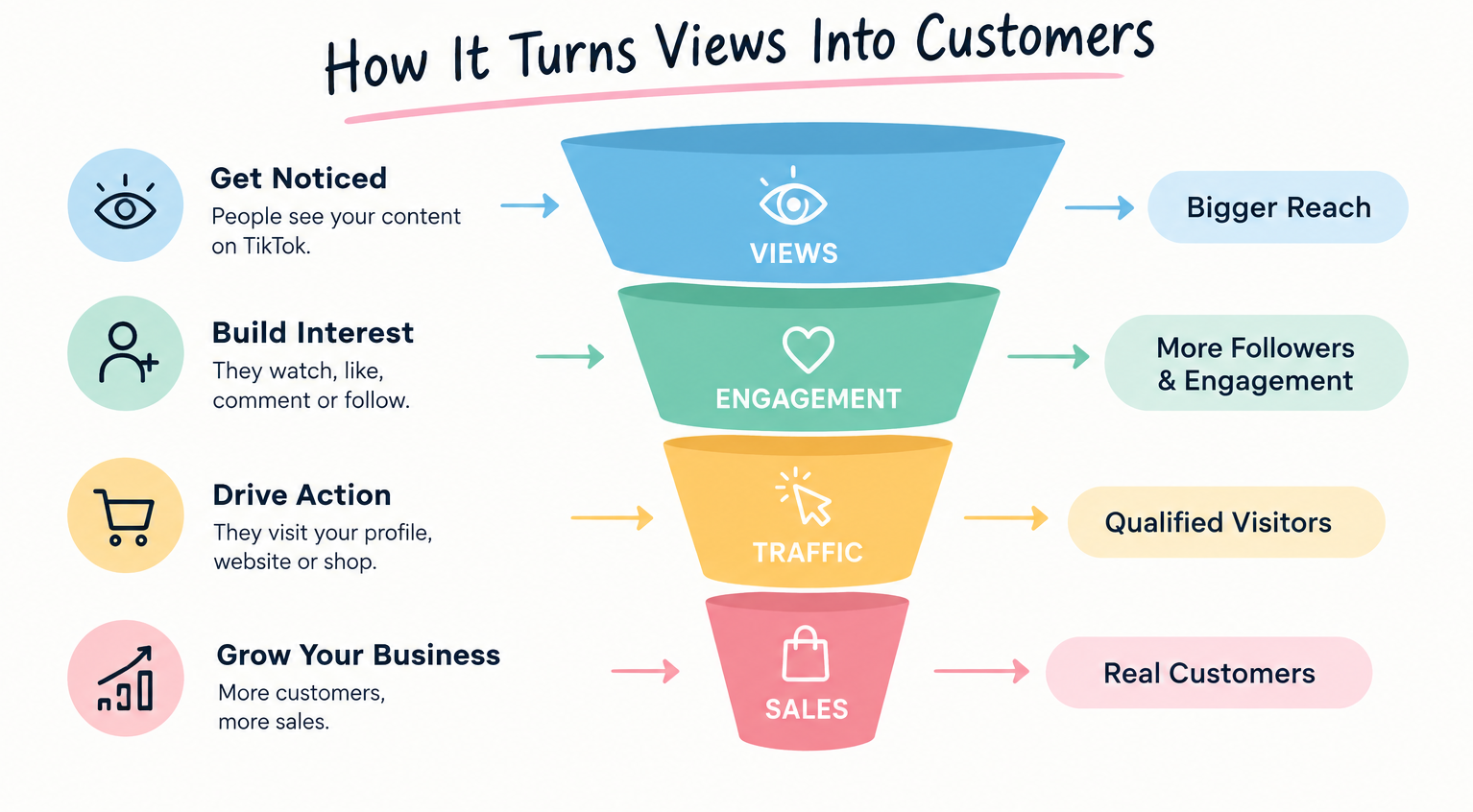
Ask any small business owner in 2026 whether they should be on TikTok and you'll usually get one of two answers: either "everyone says you have to be," or "isn't that the app that almost got banned?" Both answers are outdated. The ownership question is settled. TikTok completed its divestiture to a US-controlled joint venture in January 2026, and the app isn't going anywhere. The real question about TikTok for small business 2026 is whether the platform is still worth the actual hours it takes to show up there, and the honest answer depends far more on your product and your capacity than on the platform's popularity.
This isn't a hype piece or a dismissal. We'll walk through what the current data actually shows about organic reach and ROI, who TikTok genuinely works for right now, the framework we use to help clients decide whether it earns a place in their marketing mix, and the mistakes that waste the most time once a business commits to trying it. By the end, you should have a clear enough picture to make the call for your own business, without relying on whatever a competitor happened to post about last week.
For most of 2025, the uncertainty around TikTok's US future was a legitimate reason for small businesses to hold off investing real time in the platform. That uncertainty is gone. TikTok's US operations now run under TikTok USDS Joint Venture LLC, a US-controlled entity backed by Oracle, Silver Lake, and other American investors, with the deal closing in January 2026. The app remains available, and more than 170 million American users are still on it, a scale few marketing channels can match at any price.
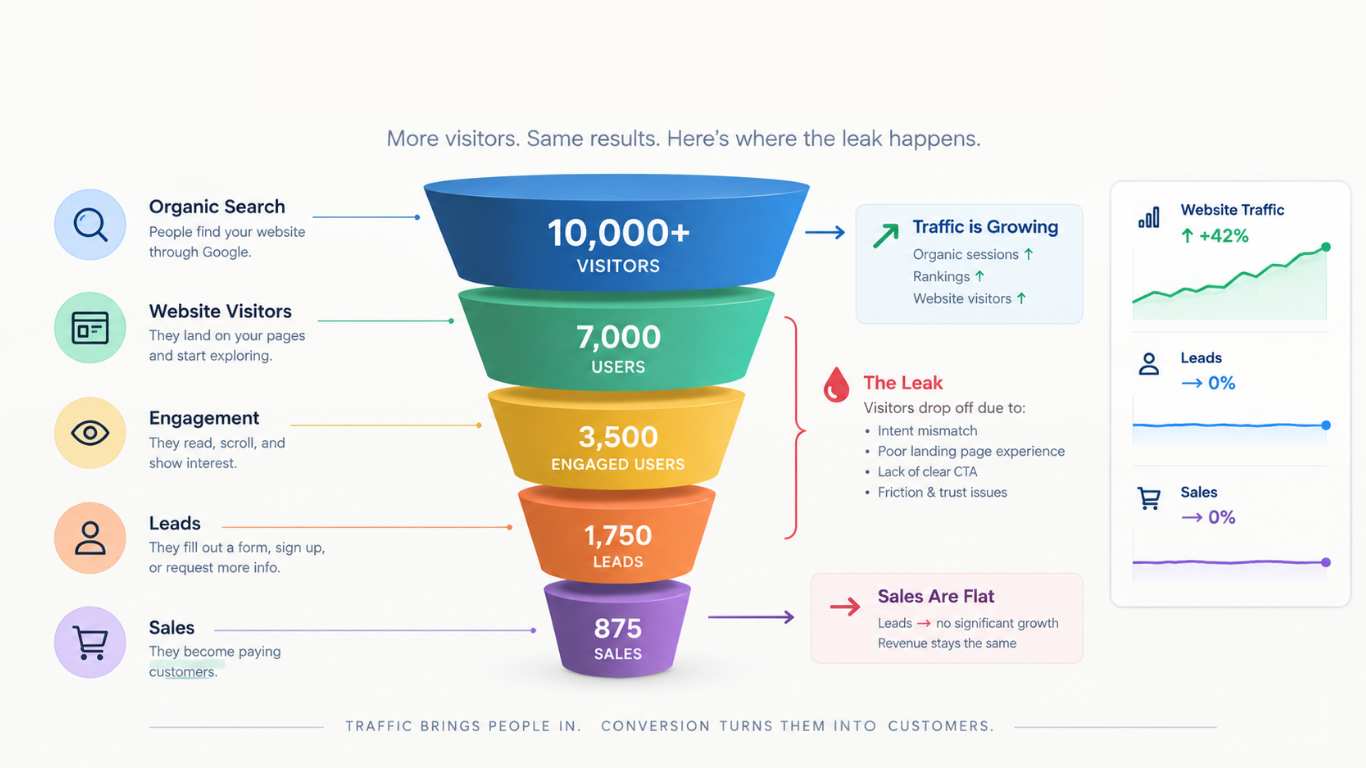
That resolution removes one legitimate objection, but it doesn't answer the question that actually matters for a small business owner deciding where to spend limited marketing hours: does TikTok marketing ROI justify the time relative to channels you already know work? The platform being stable isn't the same as the platform being worth your specific business's time, and a lot of the advice circulating online still hasn't caught up to that distinction.
The numbers on TikTok in 2026 are genuinely more favorable for small businesses than most other platforms, with real caveats worth understanding before you commit.
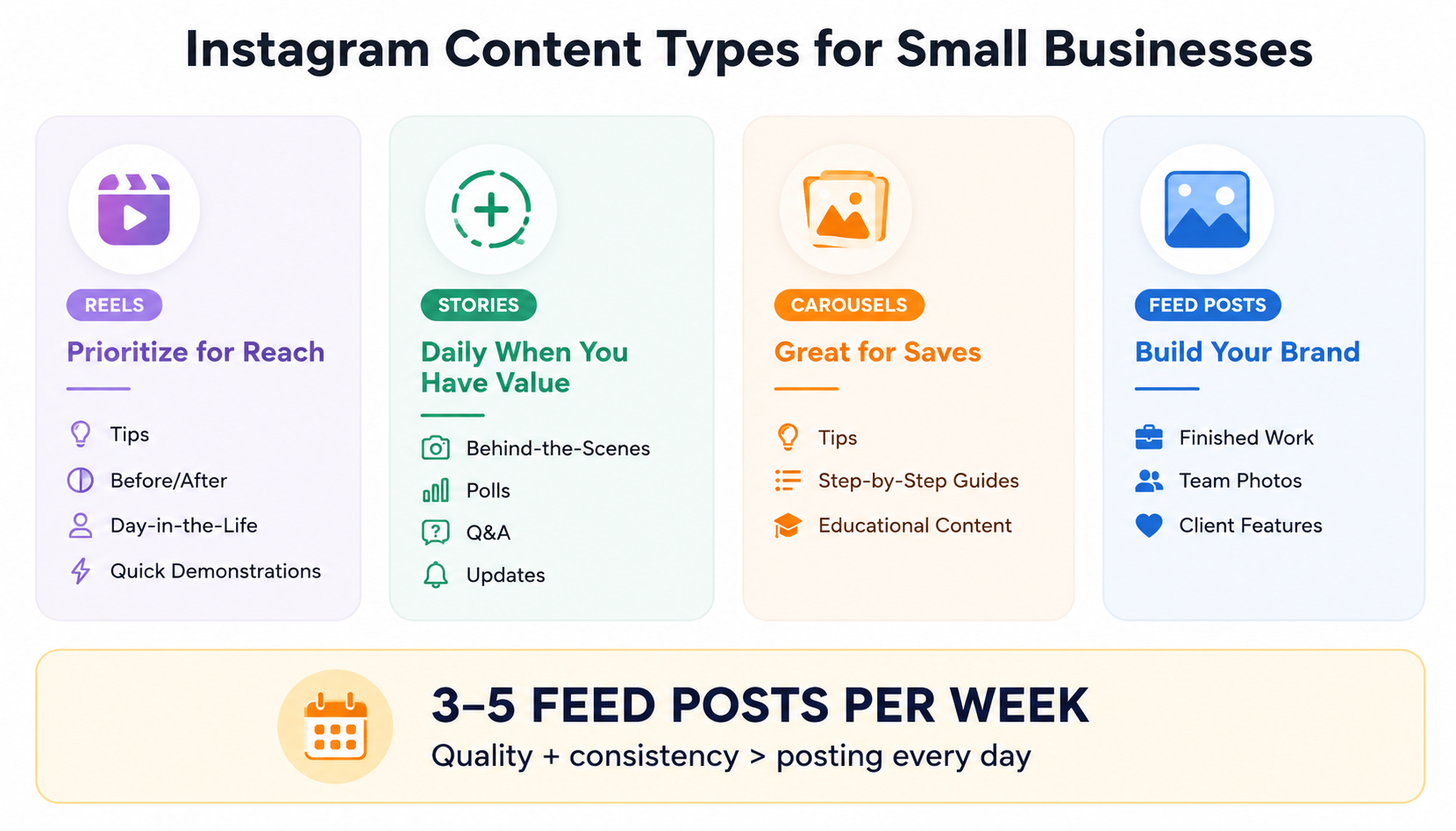
Key insight: TikTok in 2026 still rewards clarity and restraint more than volume. Brands posting fewer than six times a week see meaningfully higher engagement than high-frequency accounts, which is good news for a small business without a dedicated content team. You don't need to out-post anyone. You need to out-focus them.
Rather than answering should small business use TikTok in the abstract, we walk clients through four questions before recommending it as a channel. This is covered in more depth in our guide to organic versus paid social budget priority, but the TikTok-specific version looks like this.
If you answered yes to at least three of these, TikTok is very likely worth the trial period. If you answered no to two or more, especially the audience and sustainability questions, your time is probably better spent doubling down on a channel where you already have traction.
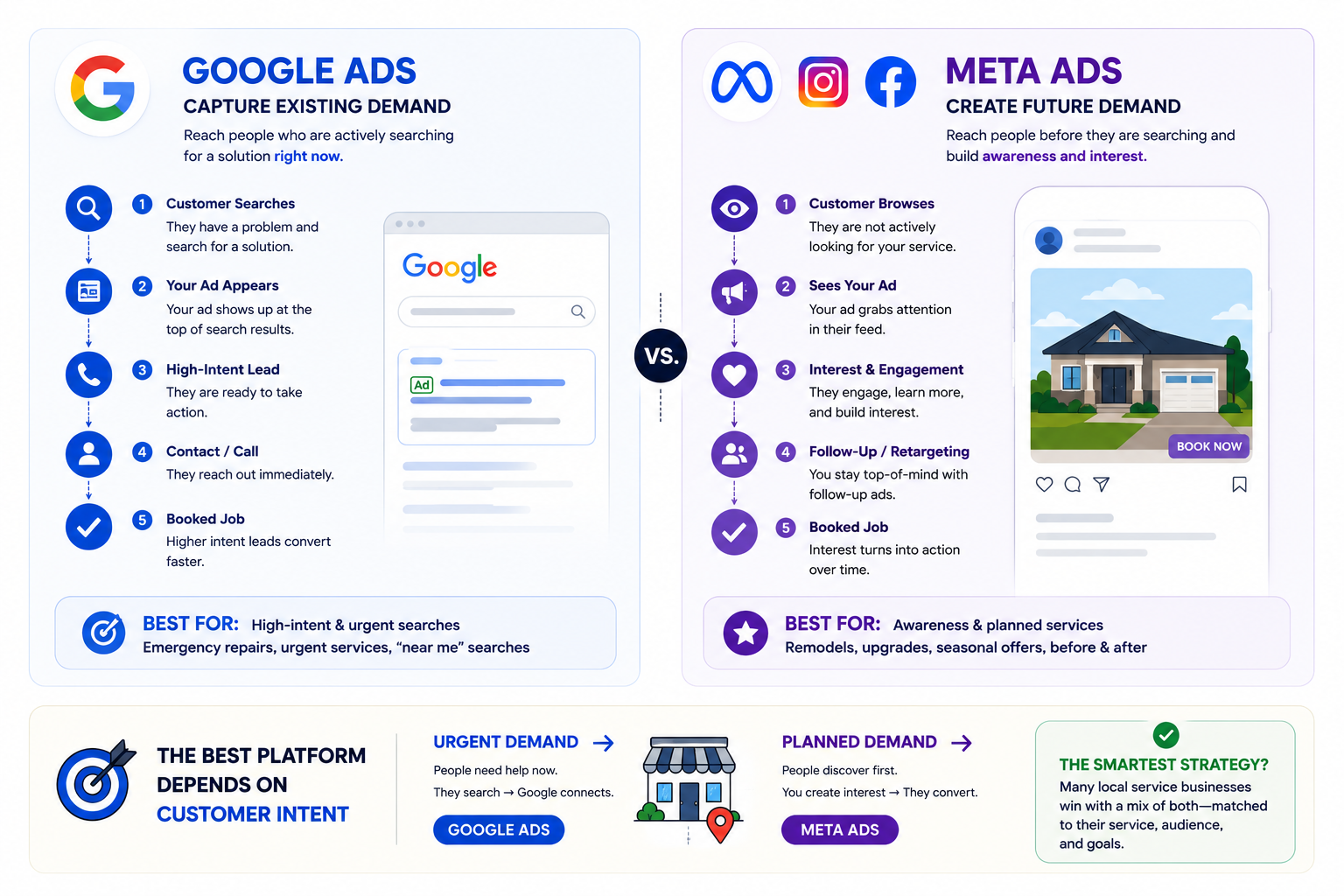
Everything above assumes organic-only investment, which is the right starting point for most small businesses. But TikTok marketing ROI looks different once paid spend and TikTok Shop enter the picture, and it's worth understanding both before deciding the platform isn't for you.
On the advertising side, TikTok's average CPM sits somewhere between $6 and $9, with CPC ranging roughly $0.82 to $1.00 depending on the benchmark source, generally positioning it between Meta's typically cheaper CPMs and LinkedIn's considerably more expensive ones. Ad engagement rates on TikTok run about three times higher than other social platforms according to TikTok's own 2025 business data, though that figure should be read as directional given the source rather than treated as an independently verified benchmark. Among small businesses that do invest in TikTok advertising, a bit more than half report positive ROI, with most of the remainder reporting break-even results, which is a meaningfully better hit rate than the platform's early reputation as an unpredictable ad channel would suggest.
TikTok Shop adds a second dimension entirely separate from advertising, and it's one many small businesses overlook when they think about the platform only in terms of brand awareness. For businesses selling physical products, TikTok Shop lets viewers purchase directly from a video or livestream without leaving the app, and a substantial share of TikTok Shop purchases are driven by influencer or creator content rather than brand-produced ads. If your product is something people discover and want immediately, home goods, beauty, novelty items, apparel, this native purchase path can matter more to your bottom line than organic reach or follower count ever will.
The practical implication: a business that decides organic TikTok isn't generating enough traction on its own doesn't necessarily need to abandon the platform. Layering in a modest ad budget behind whichever organic posts already performed well, rather than starting a paid campaign from scratch, is usually the more capital-efficient next step, and it's the approach we recommend before writing off the channel entirely.
Understanding TikTok organic reach in 2026 means understanding that the algorithm has shifted its priorities, even though the opportunity itself remains real. Reach-per-follower has contracted somewhat as the platform weights engagement depth more heavily than raw impressions, which means the businesses winning right now aren't necessarily the ones with the biggest budgets or the flashiest production.
The clearest pattern in current performance data: nano and small accounts often achieve a higher reach efficiency ratio, meaning more organic views per follower, than large accounts, because the algorithm still trusts unproven creators to keep viewers engaged rather than assuming a large following automatically means a video deserves distribution. That's an unusual dynamic among major platforms, and it's specifically favorable to a small business starting from zero. A well-structured video with a clear hook in the first two seconds and a genuine payoff can still outperform far larger competitors, provided the content respects what the algorithm is actually optimizing for right now: watch time and completion, not polish.
A boutique home goods retailer came to us skeptical about TikTok, assuming it was a platform for teenagers rather than their actual customer base. Rather than committing a large budget upfront, we ran a 90-day organic trial: three videos weekly, all shot on a phone, showing product use in real settings rather than staged product shots.
The first month generated modest views and little else. By the second month, several videos crossed into meaningfully higher view counts as the algorithm built a clearer picture of the account's audience, and product page traffic from TikTok started showing up consistently in analytics. By month three, TikTok had become the second-largest source of new customer discovery for the business, behind only organic search, without any paid spend. The business didn't go viral. It went consistent, and consistency was what the algorithm rewarded. Six months in, they layered a small ad budget behind their three best-performing organic videos rather than producing new ad-specific content, and that spend outperformed every previous attempt they'd made at paid social on other platforms.
Is TikTok for small business still worth the time in 2026? For a genuinely visual product, a customer base under 40, and a team willing to commit to a sustainable posting cadence for at least a quarter, the current data says yes, with organic engagement rates no other platform can currently match. For a business selling to an older demographic, without the capacity to post consistently, or without anyone comfortable being unscripted on camera, that same time is probably better spent doubling down on a channel where you already have proven traction.
The right answer isn't universal, and it isn't about whether TikTok is popular. It's about whether your specific product, audience, and team are actually positioned to win there. The businesses we see succeed on the platform aren't the ones with the biggest budgets or the most polished content; they're the ones who ran the fit-first framework honestly, committed to a realistic cadence, and gave the algorithm enough time to actually learn who their audience is before judging the results, rather than pulling the plug at the first quiet week.
Not sure whether TikTok deserves a place in your channel mix? Request a social media channel strategy session and we'll help you figure out where your marketing hours will actually generate the best return.